
Wastewater systems today face tough challenges. Pumps need to handle solids without clogging and still run efficiently. Smart impeller and hydraulic designs, including the innovative use of scroll impellers, can ultimately help users save money and reduce maintenance.
Key Features of Impeller Design
Two important factors in impeller design are solids passage and hydraulic efficiency:
- Solids passage refers to the size of solid, spherical objects that can pass through the pump without clogging. Bigger passages often mean fewer clogs.
- Hydraulic efficiency measures how well the pump turns energy into fluid movement. Poor efficiency leads to wasted energy and money.
The Problem with Traditional Designs
High-efficiency pumps often have tight clearances that clog easily. Pumps built for solids usually have lower efficiency. This trade-off creates problems for wastewater systems.
These design limitations become even more critical as wastewater systems evolve to handle new challenges.
Changing Wastewater and Rising Energy Costs
To meet these growing demands, it’s essential to explore pump technologies that offer both reliability and efficiency.
According to the Environmental Protection Agency, average daily water use in the U.S. has dropped from 112 gallons per person in 1980 to just 82 gallons today. Wastewater is changing. People use less water, and therefore higher concentrations of solids are present.
Today’s wastewater isn’t just human waste and toilet paper. It often includes items like so-called “flushable” wipes, mop heads, and even bottles or cans. Combined with lower water volumes, these solids dramatically increase the risk of pump clogs and failures. Utilities and private operators spend significant resources on repairs and replacements to keep systems running.
At the same time, energy costs are rising. The U.S. Bureau of Labor Statistics reports that the average retail price of electricity has risen over 200% since 1980. Efficient pumps are now more important than ever. Utilities want pumps that save power and reduce downtime.
Traditional Impellers
Solids handling pumps typically use one of three impeller designs: enclosed, semi-open, and vortex. Each design has unique strengths and weaknesses. Enclosed impellers, which feature a front and back shroud around one to three vanes, deliver the highest hydraulic efficiency. However, they are prone to clogging when faced with stringy or bulky solids. Semi-open impellers also have one to three vanes and offer better solids handling than enclosed designs, though they sacrifice some efficiency. In these designs, the pump volute acts as the front shroud. Vortex impellers take a different approach, using 9 to 15 vanes which are recessed from the flow path. This design minimizes contact with the fluid, making vortex impellers excellent at passing large solids, but very inefficient in terms of energy use. While these traditional designs work well in certain applications, none provide both superior solids handling and high efficiency, leaving a critical gap in wastewater pumping performance.
There are three common impeller types:
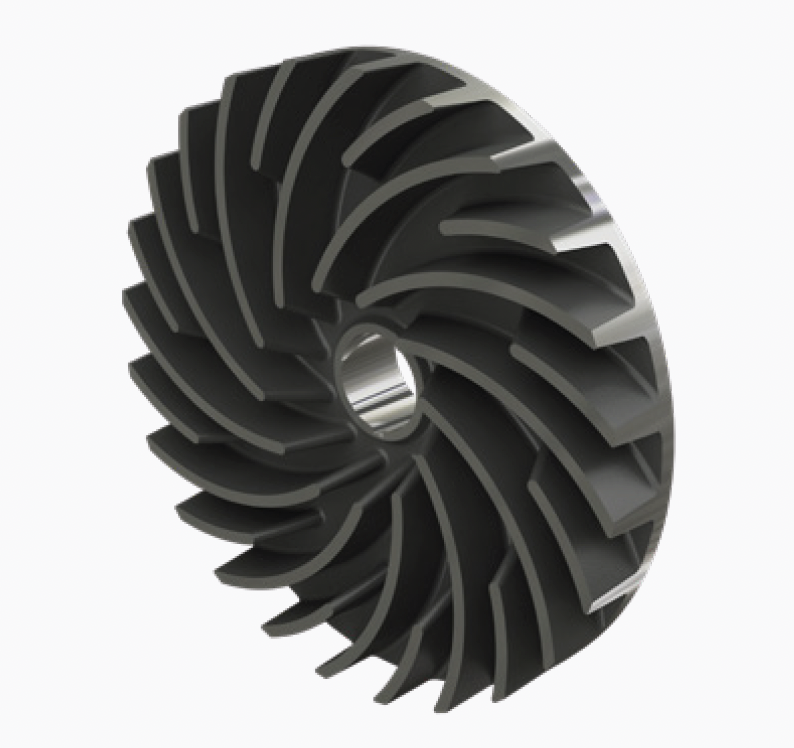
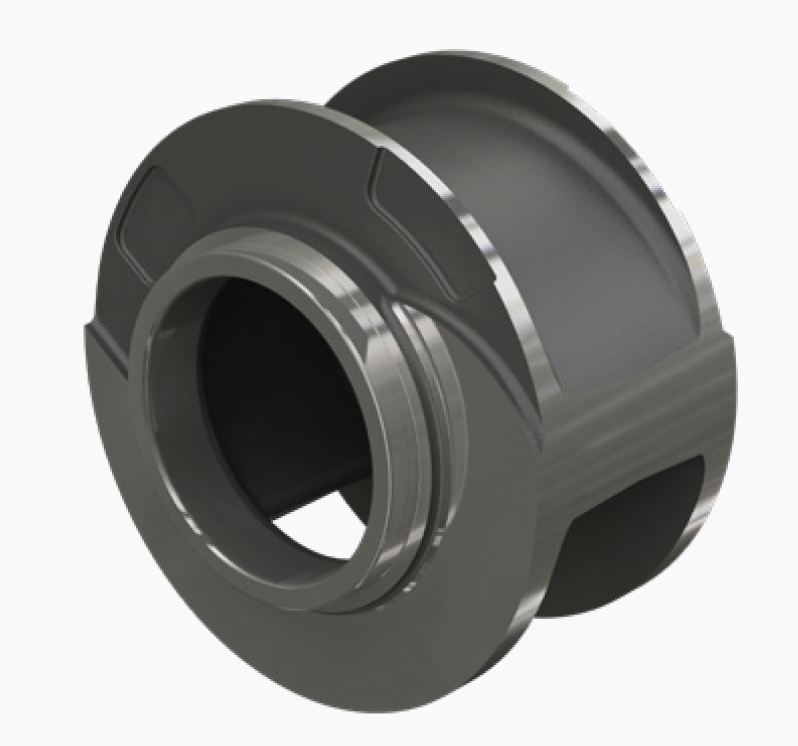
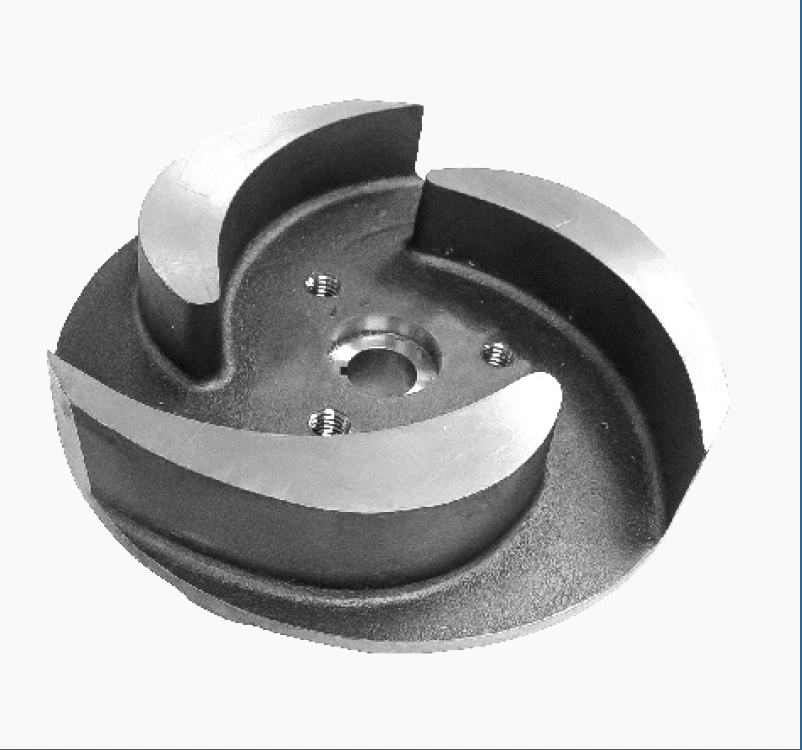
Vortex Impeller
- Semi-Open design with many vanes
- Partially or Fully Recessed from the fluid
- Excellent solids handling, low hydraulic efficiency
Enclosed Impeller
- Front and back shroud with 1 to 3 vanes
- Good solids handling, high hydraulic efficiency
- Tends to clog with stringy or bulky solids
Semi-Open Impeller
- Back Shroud only, with 1 to 3 vanes
- Often utilizes a wear plate in the volute to assist with solids handling
- Good solids handling, moderate hydraulic efficiency
Introducing Scroll Impellers
Crane Pumps & Systems created the scroll impeller to solve these issues. It looks like an enclosed impeller but has smoother, optimized flow paths that help solids move through easily.
This design keeps solids in motion, preventing clogs. It also improves hydraulic efficiency, often reaching 50% to 70% or more.
Benefits of Scroll Impellers
Wastewater systems face increasing challenges due to changing compositions and rising energy costs. As municipalities and industries strive to reduce water usage, the concentration of solids in wastewater has grown. This shift places greater stress on pump systems, especially those using traditional impeller designs.
Traditional impellers, such as enclosed and vortex types, often struggle to balance solids handling with hydraulic efficiency. Enclosed impellers may offer better efficiency but are prone to clogging, while vortex impellers handle solids well but sacrifice energy performance. This trade-off has long been a pain point for engineers and operators.
Scroll impeller technology offers a breakthrough by combining the best of both worlds. Its curved passageways allow solids to pass through smoothly, reducing the risk of clogging. At the same time, the design maintains high hydraulic efficiency, helping facilities lower energy consumption and operational costs.
Crane Pumps & Systems now delivers scroll impellers that meet the demands of modern wastewater environments. These impellers are especially effective in systems dealing with wipes, plastics, and other challenging materials. By reducing downtime and maintenance, scroll impellers contribute to more reliable and cost-effective operations.
Frequently Asked Questions (FAQ)
What is a scroll impeller?
A scroll impeller is a type of pump impeller designed with smooth, optimized passageways that help solids move through the pump without clogging. It combines strong solids handling with high hydraulic efficiency.
Why do traditional impellers clog in wastewater systems?
Traditional impellers often have tight clearances or inefficient flow paths. This can cause solids to settle or wrap around the impeller, leading to clogs and pump failures.
How does wastewater composition affect pump performance?
Modern wastewater contains more solids and less water due to reduced water usage. Items like wipes and plastics increase the risk of clogging, making pump design more critical.
What are the benefits of using scroll impellers?
Scroll impellers reduce clogging, improve energy efficiency, and lower maintenance costs. They help wastewater systems run more reliably and save money over time.
Are scroll impellers energy efficient?
Yes. Scroll impellers often reach hydraulic efficiency levels of 50% to 70% or higher, helping utilities reduce power consumption and operating costs.
Who manufactures scroll impellers?
Crane Pumps & Systems is a leading manufacturer of scroll impeller technology, offering innovative solutions for modern wastewater challenges.