
The modern wastewater stream is no longer what it was a decade ago—and it won’t slow down anytime soon. This ongoing change has created new challenges and opportunities for different pump technologies.
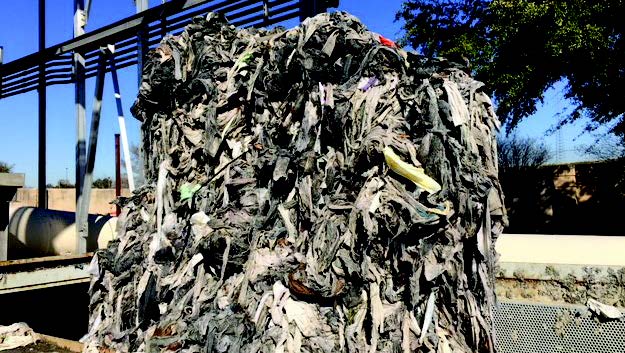
One of the most significant contributors to today’s challenges is the dramatic increase in solids content, driven largely by the widespread use of so called “flushable” wipes. While these products are marketed for convenience, they do not break down in wastewater systems and instead accumulate, wrap, and clog critical equipment.
At the same time, water conservation efforts have reshaped wastewater composition. Since the mid 1990s, U.S. water consumption has steadily declined due to high efficiency plumbing standards. Low flow toilets—now required in new construction—use less than half the water per flush compared to older systems. The result: less dilution and a denser, more abrasive waste stream.
Add to this an aging national infrastructure and millions of new users expected to connect to centralized treatment systems in the coming decades, and the pressure on collection and treatment equipment becomes clear.
These conditions demand careful equipment selection. Solids handling pumps must now be evaluated not only for hydraulic performance, but for clog resistance, torque availability, cutting reliability, serviceability, and long-term lifecycle cost.
Solids Handling Pump Selection: Defining the Application First
The evolving waste stream affects every component of a wastewater system, from valves and screenings to lift stations and pumps. Selecting the right solids handling pump is no longer just an engineering decision; it’s a risk management strategy.
The right pump can:
- Reduce clogging and unplanned downtime
- Lower maintenance and lifecycle costs
- Improve system reliability and operator safety
- Extend the life of downstream infrastructure
Among solids handling options, grinder pumps, chopper pumps, and non-clog pumps each serve a distinct purpose. Understanding where each technology excels is key to building resilient wastewater systems.
Grinder Pumps: Precision Cutting for High Head, Low Flow Applications
What the technology is
Grinder pumps macerate solids into a fine slurry, enabling wastewater to move through small‑diameter pressure sewer pipes. They excel in controlled‑flow, high‑head applications. Axial‑cutting designs outperform radial cutters by reducing wrap potential and delivering consistent startup torque.
When to use a grinder
- Residential and light commercial pressure sewer systems
- High‑head requirements with limited pipe diameter
- Sites needing aggressive solids reduction before transport
Installation & Maintenance Considerations
Grinder pumps are commonly installed on rail systems or stands within prefabricated wet wells. While designed for serviceability, they do require periodic maintenance, particularly to cutting mechanisms and controls, over their lifespan.
Barnes Grinder Solutions
- Barnes Razor (2 HP): Axial‑cutting technology, dual‑voltage motor, oil‑filled design for sustained torque, plug‑n‑play cord, and flows to 54 GPM at heads to 200 ft.
- Barnes Blade (3–15 HP): A heavy‑duty grinder for larger systems requiring higher flows and heads (up to 155 GPM and 242 ft). Ideal when more capacity is needed than standard 2 HP grinders can deliver.
Chopper Pumps: Heavy Duty Solids Reduction for Demanding Environments
What the technology is
Chopper pumps use a slicing mechanism to shear solids before they reach the impeller. Unlike grinding (which focuses on fine particulates), chopping excels at dealing with unpredictable debris: rags, mop heads, plastics, ropes, and other items that cripple traditional pumps.
When to use a chopper
- Municipal collection systems and WWTP headworks
- High‑solids or unpredictable debris loads
- Locations where downtime is unacceptable and clogging is chronic
Cutting Advantage
Unlike grinding, chopping uses opposing cutting surfaces to distribute force and reduce material size more efficiently. This minimizes energy spikes and lowers wear over time. Some chopper pumps, including the Barnes Sithe, can even pass through a baseball bat or jeans without clogging the pump.
Reliability & Lifecycle Value
Chopper pumps are:
- Highly resistant to clogging
- Designed for long service intervals
- Simple to repair when maintenance is required
Barnes Chopper Solutions
- Barnes SITHE (Oil‑Filled Chopper): Features patented open‑center cutter design, field‑replaceable heat‑treated 440C stainless blades, plug‑n‑play cord, and ability to handle extremely challenging solids. Available from 3″–10″ discharge and up to 100–125 HP.
- Barnes envie³ Chopper (Air‑Filled, Dry‑Run Capable): Premium‑efficiency IE3 motor with glycol cooling enabling both wet‑well and dry‑pit installations. Same proven cutting hydraulics with added energy savings and maintenance access.
Non-Clog Pumps: Efficient Transport Without Solids Reduction
What the technology is
Non‑clog pumps pass solids through the pump intact, using impeller designs optimized for efficiency and clog resistance. They are the most energy‑efficient solids-handling option when influent solids are predictable.
Best suited for:
Applications where solids cutting is not required and clogging pumps is not a frequent issue. Non-clog pumps are designed to pass solids rather than reduce them, using recessed or specially designed impellers that minimize contact with debris.
When to use a Non-Clog Pump
- Municipal and industrial wet wells with manageable solids
- Applications prioritizing hydraulic efficiency and low energy cost
- Stations with screens or predictable influent characteristics
Impeller Options
- Mono‑vane & dual‑vane: Higher efficiencies (40–80%)
- Vortex: Maximum solids clearance with lower efficiency (~40%)
- Scroll: Higher efficiency compared to vortex, better non clog performance
Service Considerations
While non‑clog pumps are efficient and versatile, they are also the most susceptible to blockages when solids exceed design limits.
Barnes Non-Clog Solutions
- Barnes SH Series: Rugged municipal solids‑handling pumps with flows up to ~6400–9000 GPM, heads to ~262–305 ft, and multiple impeller designs.
- Barnes SyFlo: New submersible line with IE3 motors, scroll and vortex impellers, compact footprint, and plug‑n‑play power connection.
- Barnes envie³ Non‑Clog: Air‑filled, glycol‑cooled, premium‑efficiency motors for wet or dry‑pit duty; flood‑proof, horizontal or vertical installation.
Engineering for the Future Waste Stream
The modern wastewater environment is characterized by higher solids density, increased nonwoven content, and aging infrastructure operating under expanding demand. Pump selection must therefore prioritize reliability under abnormal conditions, not just performance at design point.
Selecting between grinder, chopper, and non-clog technology requires:
- Realistic assessment of influent solids
- Understanding of failure consequences
- Consideration of long-term maintenance access and cost
Engineered correctly, solids handling pumps form a critical defense against system instability in an increasingly complex wastewater landscape.
Summary of Solids Handling Technologies
| Pump Type | HP Range | Discharge (in.) | Head (ft) | Flow (GPM) | When to use |
| Grinder | 2–15 | 1.25–3 | 160–240 | 110–155 | High head is required and solids must be aggressively reduced before transport |
| Non-Clog | 2–530 | 3–13 | 110–400 | 70–5,500 | Solids are manageable and operational efficiency is the priority |
| Chopper | 3–250 | 3–16 | 60–200 | 475–5,000 | Reliability is critical and downtime is not an option |